









|
Getting your Trinity Audio player ready…
|
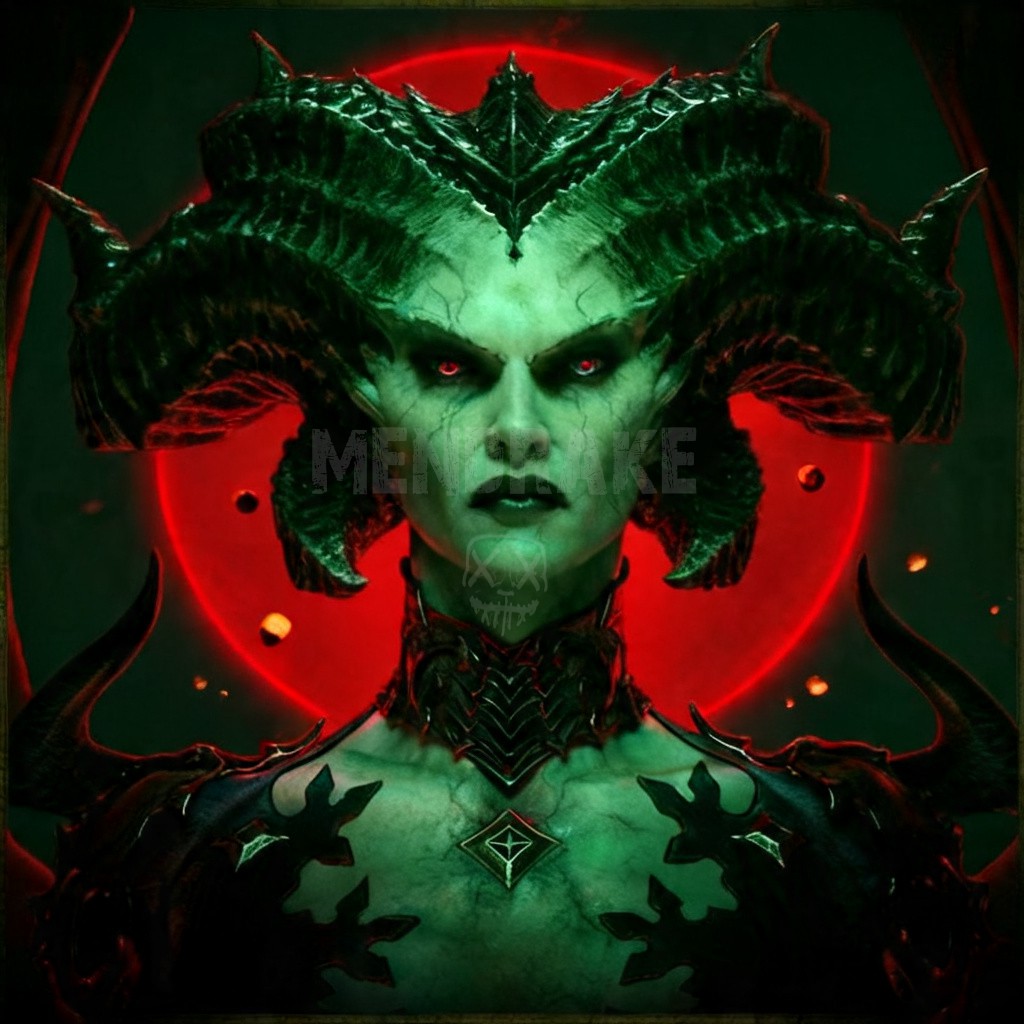
Diablo IV doesn’t need louder fireworks. It needs gravity. It needs a presence that makes Sanctuary feel like a place where every victory is temporary and every “new beginning” is just another door opening into darkness. That’s exactly why this tease lands: Lilith is back in the frame, and the message is unmistakable. The Mother of Demons isn’t a seasonal footnote. She’s the kind of figure that bends the entire narrative around her, because she represents something Diablo has always done better than almost any other universe—evil that doesn’t just destroy, but convinces.
To understand why “Lilith returns” matters, you have to remember what Lilith is in the Diablo mythos. She’s not simply a demon with a crown. She is the Daughter of Hatred, tied to Mephisto’s lineage, and that connection is more than family drama—it’s a thematic blueprint. Hatred in Diablo isn’t just anger; it’s the engine that turns people into weapons, that turns faith into fanaticism, that turns survival into justification. Lilith carries that engine inside her. She doesn’t march in with armies to prove strength. She walks into a broken world and offers meaning, direction, and power to people who have already lost everything. That’s why she’s terrifying: she can sound like the only honest voice in a world full of hypocrisy.
In Diablo IV, Lilith’s role has always been intimate and invasive. She doesn’t feel like a distant cosmic threat; she feels like a hand on the back of your neck. She appears in visions, in whispers, in the cracks of human weakness. She doesn’t just tempt—she reframes. She takes the brutal reality of Sanctuary and turns it into a moral argument: if Heaven has abandoned you and Hell will consume you, then why shouldn’t you seize the power to protect what’s yours? It’s a seductive logic because it’s built on truth. Sanctuary is cruel. The innocent suffer. The righteous die. And the people left behind learn quickly that purity doesn’t keep you alive.
That’s where the title “Mother of Demons” becomes more than a dramatic label. Lilith is a creator and a cultivator. She doesn’t merely unleash monsters; she nurtures them—sometimes literally, often ideologically. She is the patron of the desperate, the broken, the ambitious, and the furious. She doesn’t promise peace; she promises a future where humanity stops being prey. But Diablo’s great trick is that every promise comes with a hidden clause. Power always demands payment. And the payment is rarely gold—it’s identity. It’s what you become when you accept that the ends justify the means.
So when Blizzard signals her return now, it’s hard not to read it as a deliberate pivot. Diablo IV has been evolving through its live-service rhythm: new mechanics, new tuning, new endgame priorities, the constant push-and-pull of builds and balance. That’s the surface layer. But the deeper layer—the one that keeps players emotionally invested—is story momentum. A world like Sanctuary needs a thread that feels inevitable, not optional. Lilith is that thread. She can unify disparate arcs because she sits at the intersection of human suffering and cosmic politics. She can be personal and apocalyptic at the same time. She can make a single village tragedy feel like a symptom of a war between powers that treat humanity as currency.
And Diablo, as a franchise, has always been about cycles. Evil returns. Corruption spreads. Heroes fall. Victories rot. The most haunting Diablo stories aren’t about triumph; they’re about consequence. Diablo IV understood that when it refused to give players a clean, comforting ending. It left Sanctuary wounded. It left the Wanderer changed. It left the world in a state where “saving” it feels like a temporary delay, not a resolution. In that context, a Lilith return doesn’t feel like a reset. It feels like the next turn of the screw.
Here is the official teaser. It’s short, but Diablo rarely shows you the full shape of the blade before it cuts. Watch it for the mood, for the framing, for the sense of intent—then ask yourself what Blizzard is choosing not to reveal yet.
[Spoiler] Official Teaser Trailer | Lilith Returns
Source: YouTube
The word “returns” is doing a lot of work here, because in Diablo a return is never simple. It can mean resurrection, but it can also mean influence. It can mean possession, memory, legacy, or a new mask worn by an old will. Diablo’s universe is full of echoes—visions that manipulate, voices that guide, bargains that reshape reality. Lilith doesn’t need to stride into the open to be dangerous. If her ideology spreads, if her worship grows, if her name becomes a banner for those who want strength at any cost, then she is already “back” in the only way that matters.
That’s why this tease is exciting from a player-first perspective. A Lilith-forward direction can raise the stakes in ways that go beyond loot. It can make the world feel reactive again. It can make the endgame feel like it has narrative weight, not just mathematical optimization. It can push Diablo IV toward the kind of content that feels like a chapter in a larger saga, where bosses aren’t just mechanics checks but symbols—manifestations of the choices Sanctuary keeps making, again and again, because it can’t afford to be innocent.
Our take: Diablo IV is at its best when it leans into gothic horror and moral collapse, when it makes you feel small under the shadow of ancient powers, and when it refuses to let you pretend that heroism is clean. Lilith embodies that tone perfectly. She is not a cartoon monster. She is conviction sharpened into cruelty. She is “salvation” offered by a hand that will never let go. If Blizzard is pointing the camera at her again, we’re not just getting another beat—we’re being warned that Sanctuary’s next phase will demand something from its people. Not just time. Not just skill. Something deeper.
We’ll keep tracking this thread and update as soon as Blizzard drops official context beyond the teaser.
Leave a Reply