







|
Getting your Trinity Audio player ready…
|
Today’s briefing takes a deep editorial dive into Blizzard Entertainment’s major system reveal for Diablo IV PTR 3.3.0. When public test realms open for upcoming live-service seasons, we look past surface-level excitement to analyze structural changes: endgame scaling, progression economy shifts, and itemization continuity.
Diablo IV — PTR 3.3.0 Deep Dive: War Plans Rework, Horadric Affixes, and Dual-Boss Endgame Mechanics
Blizzard Entertainment has published its full technical breakdown for the upcoming Public Test Realm (PTR) 3.3.0, scheduled to run from October 27 through November 3, 2026. Designed as the primary playtesting window for Season 16, this build introduces extensive structural overhauls to meta-progression, itemization systems, and high-tier boss encounters.
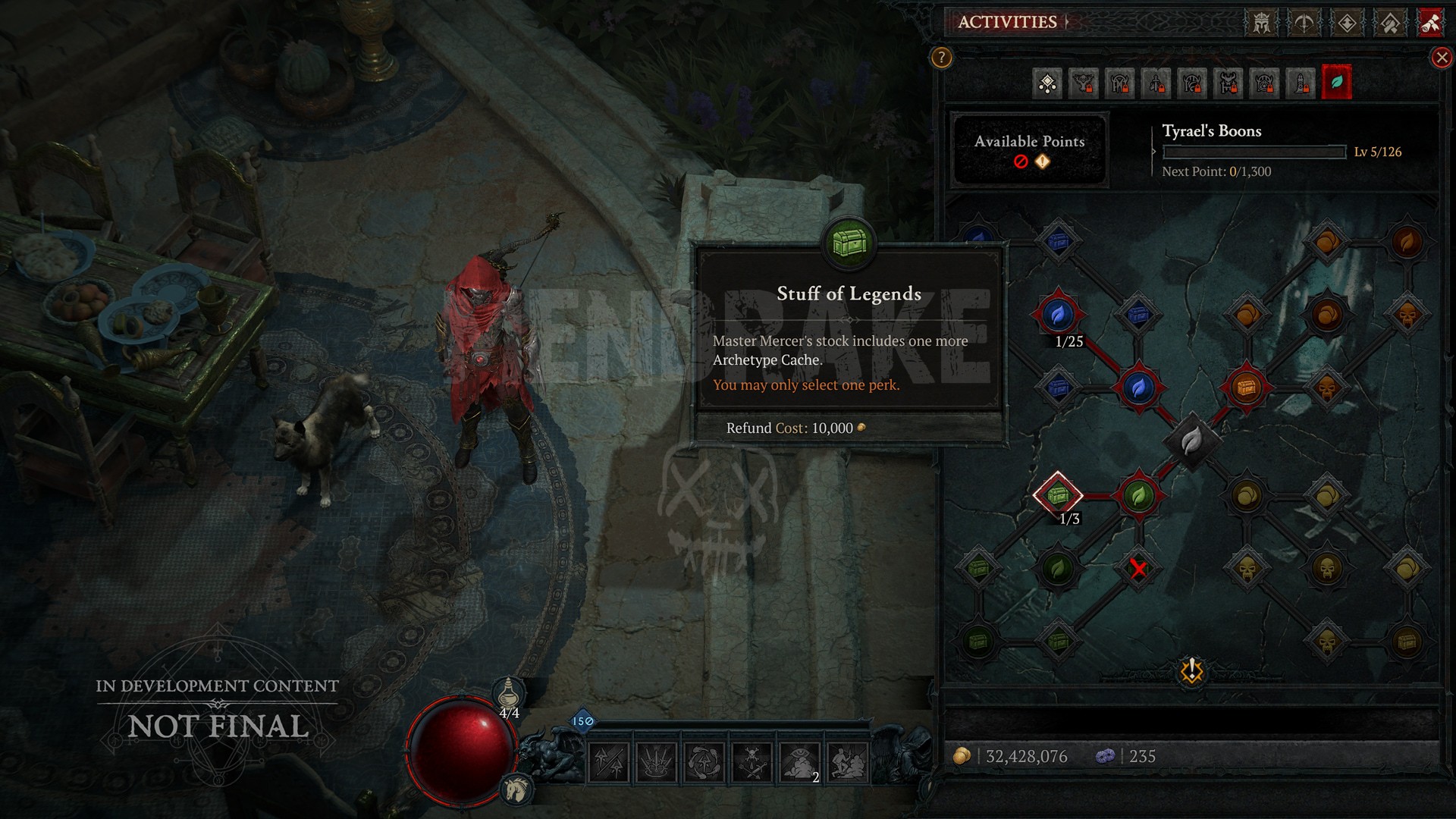
The centerpiece of PTR 3.3.0 is a complete overhaul of the War Plans system. Moving away from static progression, War Plans now function as a customizable meta-tree powered by a new seasonal currency: Marks of Wisdom. Players can assign points to specific activity nodes—such as Nightmare Dungeons or Infernal Hordes—to directly dictate their targeted loot drops, choosing between focused armor, weapon, jewelry, Obducite, or Horadric material rewards. Furthermore, Season 16 introduces Tyrael’s Boons, a 132-point seasonal specialization tree split across four distinct paths: Curious Addition (Purveyor of Curiosities gambling overhauls), Merchant of Mystery (Torment-level Forgotten Soul caches), Scent of Gold (gold and experience scaling), and Trash for Treasure (transmutation discounts and Horadric Cube recipes).
Itemization sees a major addition with the introduction of Horadric Affixes. Gear items rolling with Horadric properties unlock secondary conditional powers when paired with active Talisman Set bonuses. To complement gear progression, the Alchemist receives a new Horadric Cube recipe known as Greater Tempering, allowing players to upgrade a standard Tempered Affix into a Greater Affix for 30 Scrolls of Restoration and 1,000 Obducite.
Endgame combat difficulty escalates significantly with Pandemonium’s new Dual-Boss encounter design. Rather than fighting isolated lair bosses, players at high Torment tiers will face synergistic pairings—such as the Fractured Reaper fighting alongside the Corrupted Reaper—requiring strict crowd-control management, elemental resistance capping, and precise defensive cooldown rotations.
Across class balance, PTR 3.3.0 delivers targeted adjustments to all eight classes. Highlights include a rework of Druid Shapeshifting costs and Ultimate cooldown resets, Necromancer Critical Strike chance buffs via the Book of the Dead, and Paladin Oath damage reduction scaling. Active players jumping into the PTR should utilize the Mrak vendor boosts in major hub cities to test high-tier spec limits and report mechanical inconsistencies via the in-game feedback menu.
 Mendrake’s opinion on this:
PTR 3.3.0 represents one of the most mechanically dense seasonal overhauls Diablo IV has seen. Giving players direct control over War Plan reward targeting and introducing deterministic Greater Tempering upgrades are massive wins for progression clarity. If Blizzard maintains this level of transparency through the testing phase and resists over-nerfing build variety, Season 16 could set a new benchmark for ARPG endgame loops.
Leave a Reply